
If you love the classic Czech bolt-action rimfire for small-game hunting or precision plinking, choosing the right optic can elevate it from “fun” to “surgical.”
In this guide, I walk you through my top sight picks, how I tested them, and what actually matters on a lightweight .22 rifle with an 11mm dovetail. I cover battery life, glass clarity, mounting height, and parallax behavior at rimfire distances.
Most importantly, I explain what works on a woodland stroll versus a squirrel at 35 yards off sticks. Here’s everything you need to know about the Best Red Dot for Cz 452 without the fluff—just real results from real range time.
I’m a long-time rimfire nerd with a soft spot for the CZ bolt-gun family. I’ve owned multiple 452s in different trims (American, Trainer, Silhouette), fitted both heavy and sporter barrels, and experimented with just about every practical optic configuration you can imagine—from super-low irons to compact LPVOs and micro red dots. My testing emphasis is the way you’ll actually use a .22: off-hand shots on pests, kneeling braced against a tree, and from field packs or improvised rests.
I don’t chase marketing claims. I chase hits. That means I evaluate how fast the dot appears on target, how forgiving the eyebox feels at awkward neck angles, whether the controls are glove-friendly on a cold morning, and how the sight holds zero after a few hundred rounds (and some harmless bumps).
If a sight fogs up or washes out on snow, I tell you. If the brightness steps are perfect for shady timber, I tell you. My notes are built from range logs, chronographs, and real handling—not from spec sheets alone.
Rifles & Setup: CZ 452 American (sporter barrel) and CZ 452 Trainer with the standard 11mm dovetail receiver. I used low-profile 11mm-to-Picatinny adapters for most micro-tube dots, and a minimal-height dovetail rail for open reflex models. The goal was always to keep cheek weld natural and maintain a fast, intuitive head position.
Distances: 15–75 yards, with most shots at 25–50 yards—typical rimfire pest-control and plinking ranges.
Ammunition: Standard-velocity 40-grain and subsonic loads for realistic use (quiet backyard and small-game scenarios).
Conditions: Early morning and late afternoon woods light, overcast range sessions, and bright noon sun on reactive steel. A few light drizzles to check lens coatings and water shedding.
What I Measured/Observed:
Before the deep dives, here’s the shortlist that earned a place in this guide to the Best Red Dot for Cz 452—each for a different reason and budget:
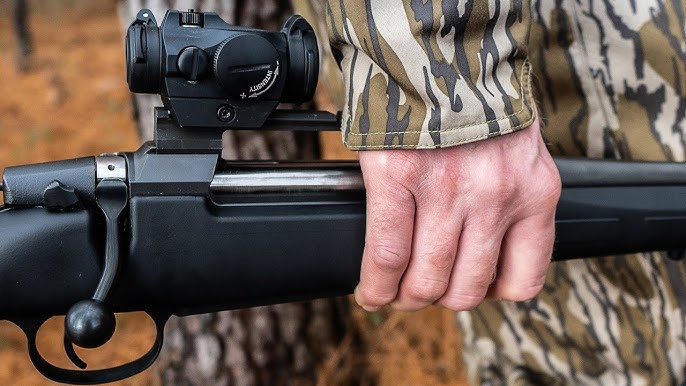
The Micro H-2 is Aimpoint’s gold standard for tiny, durable, and crystal-clear red dots. On a light .22 like the CZ 452, it practically disappears until you shoulder the rifle—then the dot is just “there.” Battery life measured in years, outstanding coatings, and a reputation for shrugging off abuse make it the no-compromise choice if you want a dot that may outlast the rifle. It’s not cheap, but it’s the reference point I compare everything else against.
Product Specs
My Personal Experience
Mounted on a low Picatinny adapter, the H-2 gave me a cheek weld identical to irons on the Trainer stock. Dot clarity was excellent even on backlit targets at 40–50 yards. The rotary brightness knob is precise, and the “just-bright-enough” levels are ideal under canopy. I ran several “snap-to-dot” drills from low ready; my time to first hit on a 4” steel at 35 yards was consistently best with the Aimpoint, particularly when wearing a hoodie and gloves. After a weekend of sling-carry and a few knocks, zero didn’t budge.
Online Customer Comments/Discussions
Owners consistently praise longevity and toughness. Some balk at the price but end up admitting it’s a lifetime buy. Many mention the dot’s crispness and the coatings’ resistance to glare.
Mounting Method
Requires an 11mm-to-Picatinny adapter/rail on the CZ 452. Use the low Micro mount to keep height over bore minimal.
╰┈➤ Explore User Feedback and Current Pricing on Amazon
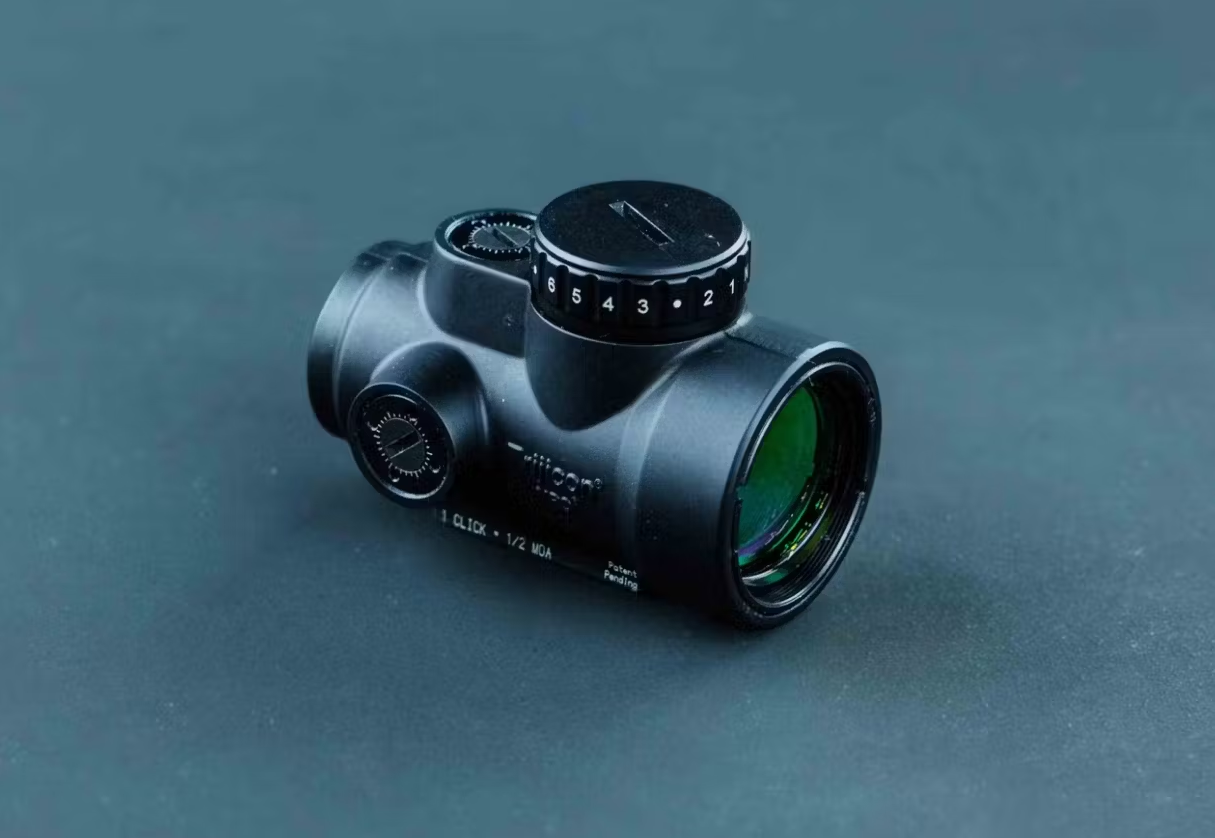
The MRO is famous for its large objective and generous eyebox, making target acquisition lightning-fast—especially from odd angles. That’s fantastic on a light rimfire used for walking the woods. The control scheme is intuitive, and the housing is stout. While slightly larger than micro-tubes, its speed advantage on reactive steel and small-game silhouettes is real.
Product Specs
My Personal Experience
On the Trainer’s longer stock, the MRO felt natural—the extra window helped me stay target-focused while threading the dot through brush. With both eyes open, sighting was almost reflexive. At 25–30 yards, transitions between steel plates were quickest with the MRO. Brightness steps felt well-spaced; on a snowy morning I appreciated the upper end, while in dim woods the lower settings avoided bloom. The optic held zero perfectly after a few hundred rounds and a damp day in the field.
Online Customer Comments/Discussions
Shooters love the wide field of view and durability. The size compared to micro dots is the common tradeoff noted, but most consider the speed worth it.
Mounting Method
Use a low Picatinny mount on an 11mm-to-Pic rail. Keep the centerline close to bore to preserve natural cheek weld.
╰┈➤ Explore User Feedback and Current Pricing on Amazon
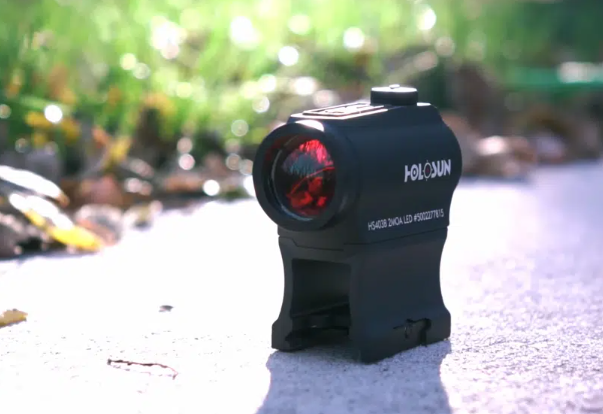
The HS403B punches far above its price. It’s compact, reliable, and the battery just keeps going thanks to efficient electronics and shake-awake. The controls are simple, the glass is good for the money, and the included caps are actually useful. For someone who wants dependable performance without a premium price tag, this is the sweet spot.
Product Specs
My Personal Experience
With a very low adapter rail, the HS403B sat perfectly for heads-up shooting on the American stock. The dot stayed crisp at 25–40 yards, with minimal perceived bloom on pale targets when I dialed brightness carefully. I deliberately stored the rifle for a week, then snapped it up—shake-awake activated reliably and my first shot landed where expected at 30 yards. After a couple mild bumps, zero stayed put. For price-to-performance on a rimfire, it’s a standout.
Online Customer Comments/Discussions
Users often mention the long battery life, dependable wake, and overall build quality for the cost. Occasional comments note the dot can appear starry to some eyes—common with many LEDs depending on astigmatism.
Mounting Method
Use the low Micro/Picatinny mount on an 11mm-to-Pic rail. This keeps the sight close to the bore and preserves natural handling.
╰┈➤ Explore User Feedback and Current Pricing on Amazon
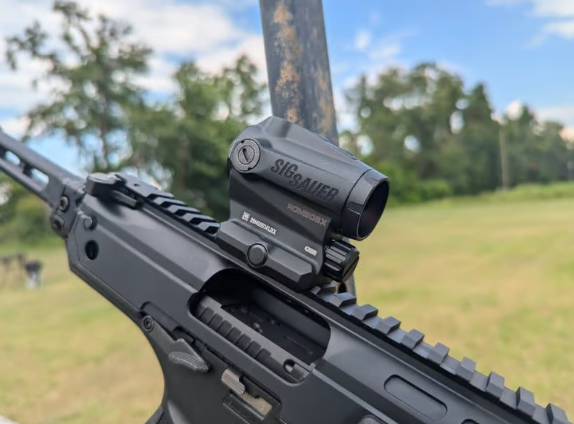
The ROMEO5 is the budget king that rarely disappoints. MOTAC motion activation, decent brightness steps, and a reliable 2 MOA dot make it ideal for a first red dot on a .22. It’s robust enough for normal bumps and scrapes, and the controls are beginner-friendly. If you’re outfitting a youth shooter’s CZ 452, this sight is hard to beat.
Product Specs
My Personal Experience
I set the ROMEO5 on a low mount over a narrow Picatinny adapter. MOTAC did its job—pick up the rifle and the dot is on. On steel swingers at 25 yards, the dot stayed clean at moderate brightness. I especially like the tactile click of the elevation/windage for confirming adjustments. After tossing the cased rifle into a trunk, the sight held zero perfectly. It’s not the lightest optic, but on a rimfire that weight is negligible.
Online Customer Comments/Discussions
The most common praise: reliability for the money. New shooters love MOTAC. Some advanced users wish for slightly finer brightness gradations, but concede it’s fantastic value.
Mounting Method
Mount on a low Picatinny adapter for the 11mm dovetail. If you must use a taller mount, consider a cheek riser—though low is best on the 452.
╰┈➤ Explore User Feedback and Current Pricing on Amazon
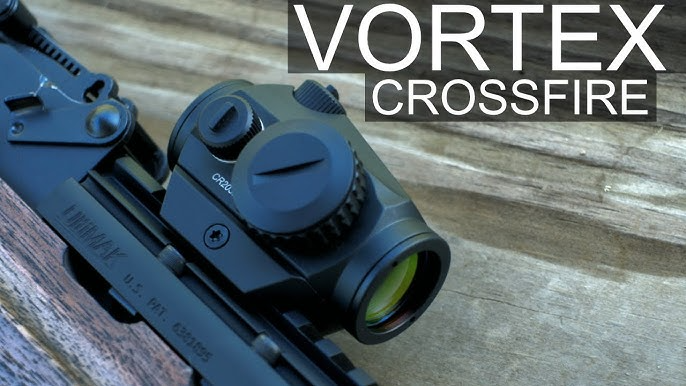
The Crossfire Gen II is a straightforward, durable red dot with excellent customer support behind it. It’s not packed with fancy features, but it dials in quickly, holds zero, and resists fog and drizzle. If you want a sight you can mount, zero, and forget, this is a strong pick.
Product Specs
My Personal Experience
On the American stock, the Crossfire sat just right with the low mount. The dot brightness is easy to tune, and the sight never washed out against white steel in noon sun. I particularly appreciate the turrets: the clicks feel positive and repeatable, so small corrections at 50 yards are painless. The optic shrugged off a wet afternoon and showed no internal fogging. My times on miniature poppers at 30 yards matched my mid-pack averages—consistent, confidence-building performance.
Online Customer Comments/Discussions
Owners often note the solid construction for the money and the great warranty support. Some folks mention it’s a tad heavier than ultra-micros, but functionally it never seems to matter on a rimfire.
Mounting Method
Install on a low Picatinny rail adapter attached to the 11mm dovetail. Keep it low to avoid a “chin weld.”
╰┈➤ Explore User Feedback and Current Pricing on Amazon
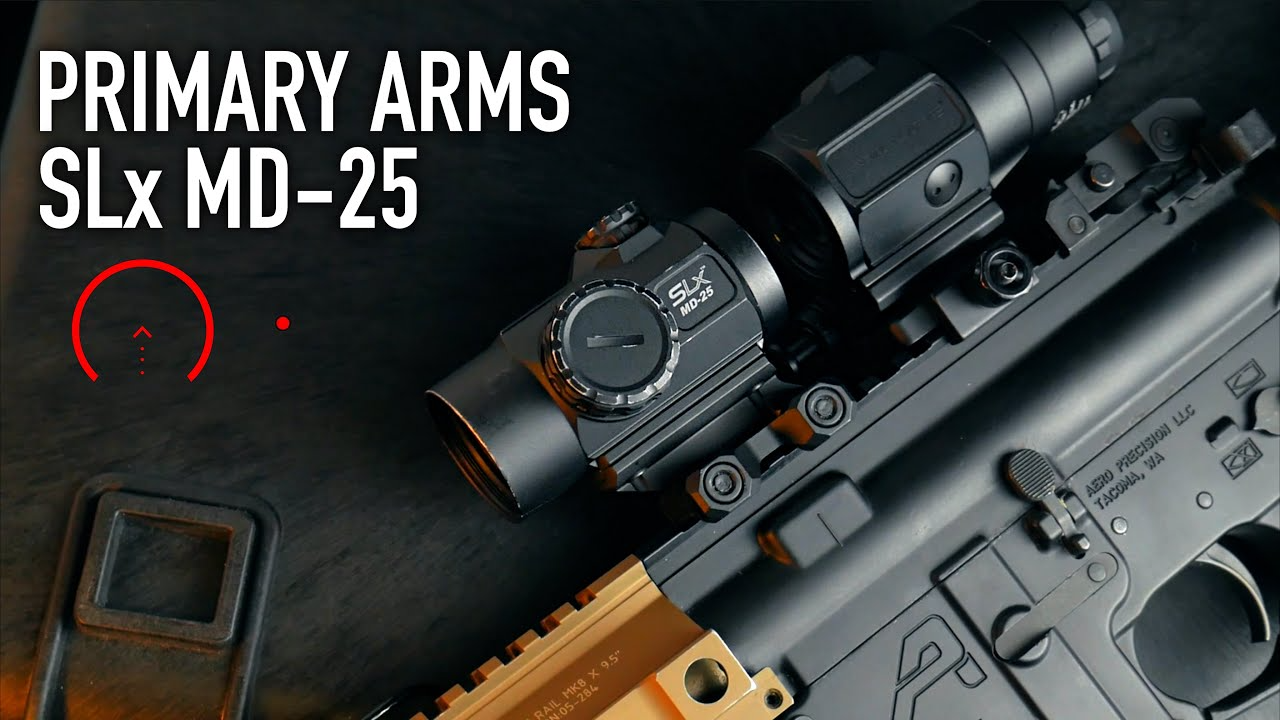
Primary Arms’ SLx Advanced Microdot has a tactile rotary knob, surprisingly clean glass, and a reliable 2 MOA dot. It’s a great “leave-on-the-rifle” sight because you can set it and forget it. The form factor is compact enough to keep your CZ 452 nimble in the woods.
Product Specs
My Personal Experience
I’m a fan of rotary knobs for gloved use—the detents on this model are positive and predictable. On a 35-yard KYL rack, the dot made it easy to hold just a hair low for subsonic drop while staying centered. Glass was surprisingly neutral for the price; edge distortion was minimal and the dot stayed circular at sensible brightness. It kept zero after a few field bumps and cleaned up quickly after a sprinkle.
Online Customer Comments/Discussions
Shooters praise the price-to-performance ratio and like the rotary control. Some report the dot can flare at max brightness—true of many budget dots—so run it as low as you can while staying visible.
Mounting Method
Use a low Micro mount on an 11mm-to-Picatinny rail adapter. The lower you can keep it, the more natural the cheek weld.
╰┈➤ Explore User Feedback and Current Pricing on Amazon
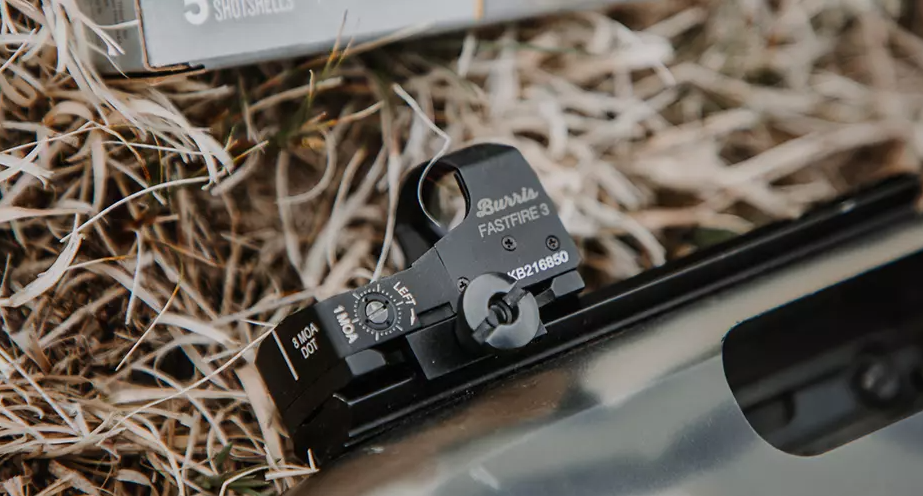
If you want the lightest, lowest setup on a rimfire, an open reflex like the FastFire 3 is compelling. The 3 MOA dot is quick on close targets and plenty precise for a squirrel’s head at 30 yards. It’s small, simple, and keeps the rifle extremely lively for snap shots.
Product Specs
My Personal Experience
I mounted the FastFire 3 as low as possible on a slim rail plate. The sight picture is unobstructed and fast—especially useful when hunting in thick cover where a tiny window makes all the difference. On bright days, manual brightness worked best for me; on cloudy days, the auto mode did fine. Despite the open emitter design, drizzle wasn’t a problem during my sessions, but I do keep a small lens cloth handy. Zero held after transport and field carry.
Online Customer Comments/Discussions
Most owners love the weight savings and speed. Some note that an open emitter can collect debris in rough weather—keep it clean and consider a simple hood if you’ll be out in the muck.
Mounting Method
Requires a Picatinny plate on the 11mm dovetail. Choose the lowest adapter you can find to keep sight height down.
╰┈➤ Explore User Feedback and Current Pricing on Amazon
Know your receiver: Most CZ 452 rifles use an 11mm dovetail. That means you’ll typically need an 11mm-to-Picatinny adapter/rail for modern red dots. The lower and slimmer the rail, the better your cheek weld and the more natural your head position.
Keep it low: Height over bore affects how naturally you mount the rifle and how your holds feel at 25–50 yards. Aim for the lowest mount (often the “low” Picatinny clamping base included with micro dots). For open reflex optics, use the thinnest rail plate available.
Level and centered: With tiny red dots, a small cant can translate to windage drift as distances stretch to 50–75 yards. Level the adapter and optic carefully. I use a simple plumb line or a weighted string to confirm vertical alignment before torquing.
Torque and thread treatment: Follow the optic maker’s torque spec for screws, and use a small amount of medium threadlocker (not permanent). After the first range trip, confirm tightness and re-check zero.
Zero distance: For small-game work, a 35-yard zero is a sweet spot. You’ll be a hair high at 25, nearly dead-on around 35–40, and just a touch low by 50—simple mental math with subsonic loads.
Small-game hunting:
You want low weight, excellent brightness control, and a 2–3 MOA dot. Look hard at the Aimpoint H-2 (durability and glass), Trijicon MRO (speed, big window), or a lightweight open reflex like the FastFire 3 if you prioritize the lowest mount.
Backyard plinking and training:
Value and user-friendliness matter. The Holosun HS403B and SIG ROMEO5 both deliver strong performance and motion activation at a friendly price. The Vortex Crossfire Gen II is a durable, no-nonsense alternative with great support.
Cold-weather gloves & simplicity:
Prefer rotary knobs (Aimpoint H-2, Primary Arms SLx) over small buttons. Large detents are easier when your fingers are numb.
Astigmatism concerns:
Most LED dots will star or smear slightly for astigmatic eyes at high brightness. Keep brightness as low as practical and consider 2 MOA dots over larger ones. Tube-style optics often feel cleaner than some open reflex models for these users.
Budget realities:
If you can afford it and want “forever,” the Aimpoint is the endgame. If you want 80% of the performance for a fraction of the price, the Holosun HS403B and ROMEO5 are your best bets.
1) Do I need a special mount to put a red dot on the CZ 452?
Yes. The receiver typically has an 11mm dovetail, so you’ll use an 11mm-to-Picatinny adapter (preferably a low-profile one) to mount most modern red dots securely.
2) What dot size is best for rimfire small-game hunting?
A 2 MOA dot balances speed and precision. It’s fine enough for careful headshots at 30–40 yards, yet bright and visible for fast off-hand shots.
3) Will a red dot hurt my accuracy compared to a scope?
At 25–50 yards, a red dot can actually improve field accuracy for moving or quick targets because it eliminates sight alignment. For tiny targets past 60–70 yards, a low-power scope may give you a precision edge.
4) How should I zero a red dot on a .22 LR?
A 35-yard zero is a practical compromise for subsonic and standard-velocity loads. You’ll be close to point of aim from 25 to roughly 45 yards, with minimal holdover required.
5) Are open reflex sights reliable in bad weather?
Yes, but they’re open-emitter designs and can collect moisture or debris. Keep the lens clean, consider a small hood, and carry a cloth. For frequent rain, a sealed tube-style dot is more forgiving.
6) What brightness setting should I use in the woods?
Use the lowest brightness that keeps the dot clearly visible against the target. Low settings reduce bloom and preserve a crisp dot for fine aiming.
7) Can I co-witness irons with a red dot on the CZ 452?
Not easily. With low rails and mounts, many setups sit lower than the factory irons or don’t align for a traditional co-witness. Most users either remove the rear sight or ignore it when running a red dot.
Outfitting a classic rimfire bolt-gun with a modern dot turns it into a fast, forgiving field tool. Whether you choose the premium endurance of the Aimpoint H-2, the speedy window of the Trijicon MRO, or the wallet-friendly confidence of the HS403B/ROMEO5, you’ll gain faster target acquisition, simpler holds, and a cleaner sight picture in real hunting light. For my money, the Aimpoint H-2 is the lifetime buy, the Holosun HS403B is the value champion, and the ROMEO5 is the beginner-proof pick.